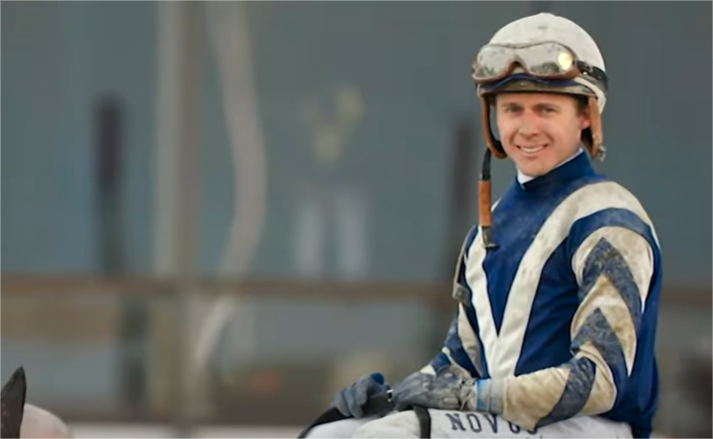
The journey back to the winner’s circle is never easy after a serious injury, but for jockey Dylan Davis, every ride at Gulfstream Park now carries a deeper meaning.
Less than four months after suffering devastating injuries in a frightening on-track accident at Aqueduct Racetrack, Davis has officially returned to competitive racing, marking a remarkable comeback that has inspired fellow riders, trainers, horse owners, and racing fans across the country.
His return to action at Gulfstream Park is more than just another chapter in his successful riding career—it is a testament to resilience, determination, and the unbreakable spirit that has defined his recovery from one of the most serious accidents of his career.
The Aqueduct Accident That Changed Everything
The accident occurred on November 14, just one day before Davis’ 31st birthday, during a race at Aqueduct Racetrack in New York.
Davis was aboard Tarpaulin when disaster struck.
According to reports, the horse directly in front of him, Heavyweight Champs, suffered a catastrophic breakdown during the race. The sudden incident created an unavoidable chain reaction that resulted in a violent collision involving Davis and his mount.
The spill was severe.
Emergency medical personnel rushed to assist Davis, who sustained multiple serious injuries as a result of the accident. What followed was a lengthy and painful recovery process that would test both his physical and mental strength.
The injuries he suffered included:
- Nine fractured ribs
- A collapsed left lung
- A punctured lung
- A broken right collarbone
- A hairline fracture in his upper right arm
- Kidney-related trauma
The extent of the injuries highlighted just how dangerous horse racing can be, even for experienced professionals who spend their lives in the saddle.
For many observers, the accident served as another reminder of the risks jockeys face every time they step onto the track.
A Long and Painful Recovery
In the days immediately following the accident, Davis faced uncertainty about his future.
Recovery from multiple fractures and internal injuries is challenging under any circumstances. For a professional athlete whose livelihood depends on strength, mobility, balance, and physical endurance, the road back can seem even more daunting.
Looking back on the experience, Davis has openly spoken about the tremendous pain he endured.
“Eleven bones, collapsed lung, punctured lung, kidney—I don’t wish the pain on anybody,” he recalled.
The physical suffering was accompanied by mental challenges as well.
The first weeks after the accident were filled with questions that could not immediately be answered. No one knew exactly how long recovery would take or when, or if, Davis would be able to return to racing at the highest level.
Rather than focusing on an uncertain timeline, he concentrated on taking each day as it came.
The first month, he said, was often more mental than physical.
For an athlete accustomed to competing daily, being sidelined can be emotionally exhausting. Yet Davis approached his rehabilitation with the same discipline and determination that had helped him become one of the sport’s most respected jockeys.
Building Strength One Day at a Time
As his injuries gradually healed, Davis began challenging himself physically.
By the second month of recovery, he was already running two miles every other day, a milestone that would have seemed impossible immediately after the accident.
His rehabilitation program included physical therapy, resistance-band training, and carefully monitored strength exercises designed to rebuild muscle and mobility without placing unnecessary stress on healing bones.
Davis worked closely with medical professionals and a personal coach to ensure that his recovery progressed safely.
Whenever limitations arose, adjustments were made. Whenever his body responded positively, the intensity gradually increased.
The measured approach paid off.
Each week brought new signs of progress and renewed confidence that a return to racing might be possible sooner than initially expected.
Returning to the Saddle
One of the most emotional moments in Davis’ recovery came when he received medical clearance to begin riding horses again.
After months away from competition, simply climbing back into the saddle represented a major victory.
The experience brought relief and excitement.
“It felt like forever to get back here,” Davis said. “But it was really only a few months.”
Returning to morning workouts allowed him to reconnect with the sport he loves while rebuilding the confidence necessary to compete at full speed.
The transition back to riding wasn’t just about physical readiness—it was also about regaining trust in himself and overcoming any lingering fears created by the accident.
For professional jockeys, confidence is as important as fitness.
Every race involves split-second decisions and immense trust between horse and rider. Re-establishing that connection after a traumatic accident is a crucial part of the comeback process.
A New Chapter at Gulfstream Park
Davis’ recovery eventually brought him south to Florida, where he began working horses at Palm Meadows, Gulfstream Park’s satellite training center in Palm Beach County.
Initially, the move was intended primarily as a way to continue rehabilitation and regain riding fitness.
What happened next exceeded expectations.
As word spread that Davis was back on horses, trainers and owners quickly began reaching out with opportunities.
The phone started ringing.
Horsemen who had worked with Davis before his injury were eager to support his return, offering mounts and expressing confidence in his abilities.
The response deeply affected him.
For a rider who has dedicated his life to horse racing, the loyalty shown by trainers and owners served as a powerful reminder of the respect he had earned throughout his career.
Rather than leaving immediately, Davis decided to remain at Gulfstream Park through the conclusion of the Championship Meet.
Back in Competition
Davis officially returned to race riding during Gulfstream Park’s prestigious Coolmore Fountain of Youth Day program.
His comeback weekend featured multiple rides, including a notable second-place finish aboard trainer Saffie Joseph Jr.’s Slow Kara.
The results themselves were encouraging, but simply being back in the starting gate represented an enormous achievement.
Additional opportunities quickly followed.
Davis was named on several upcoming mounts, including contenders in stakes races such as the Silks Run and Hurricane Bertie Stakes.
Each ride represents another step toward returning to the elite level of competition that has characterized much of his career.
The Support of the Racing Community
Throughout his recovery, Davis received tremendous support from racing fans, fellow jockeys, trainers, owners, and industry professionals.
The outpouring of encouragement reinforced the close-knit nature of the horse racing community.
While racing is intensely competitive, moments like Davis’ recovery demonstrate the deep respect participants have for one another.
Many in the industry followed his progress closely, celebrating each milestone along the way.
His successful return has become one of the sport’s most uplifting comeback stories of the year.
Looking Ahead
With Gulfstream Park serving as the launching point for his comeback, Davis has already begun looking toward the next stage of his season.
Plans include heading to Keeneland and continuing to build momentum as he resumes a full racing schedule.
Though the scars from the Aqueduct accident may never completely disappear, Davis has shown that adversity does not have to define a career.
Instead, it can become a source of strength.
His determination to recover, his willingness to trust the process, and his passion for horse racing have enabled him to overcome extraordinary challenges.
For fans and fellow competitors alike, Dylan Davis’ return serves as a powerful reminder of the resilience required to compete in one of the world’s most demanding sports.
Just months after suffering injuries that could have ended a career, he is once again doing what he loves—riding racehorses and chasing victory.
And for Davis, that opportunity means everything.
“It feels great,” he said simply. “I’m happy to be back.”
After everything he has endured, those words carry more significance than ever.